


News Center
RELATED INFORMATION
News Center
China's ban on "scrap seven" imports or into the recent surge in copper prices
Release time:
2017-08-16 13:43
Source:
On July 25, it is said that the regeneration branch of China Nonferrous Metals Industry Association has received a notice that by the end of next year, waste hardware, including waste wires and waste motors, will be banned from importing bulk waste hardware, the so-called waste category 7. At the same time, foreign media also reported that the Chinese government is preparing to ban the import of copper-containing scrap metal news.
Or stimulated by this, copper prices rose sharply.
On July 26, Shanghai Nonferrous Network, Antaike and other institutions confirmed to the Regeneration Branch of China Nonferrous Metals Industry Association that the import of waste seven categories will be banned before the end of 2018. Waste seven types of hardware can be refined and recycled copper.
LME benchmark three-month copper rose 2.6 per cent to $6400 a tonne, the highest since May 2015, on the news. Copper prices rose for the fourth straight day after surging 3.3 percent on Tuesday.
The futures price of the Shanghai copper 1709 contract was also further pushed up, soaring 5% in intraday trading, up 3.75 per cent by the close of 50040 yuan/ton.
The news has long been leaked
Last week, China formally proposed to the WTO to ban the import of 24 kinds of solid waste in 4 categories, including domestic waste plastics, vanadium slag, unclassified waste paper and waste textiles. Yesterday, another news spread wildly in the market: the waste hardware banned from import at the end of 2018 includes waste wires, waste motors and bulk waste hardware, I .e. the so-called waste seven categories.
Prior to this, the news about the ban on the import of Class VII materials for scrap copper has been widely circulated in the market for more than February. On July 26, according to Ye Jianhua, an analyst in the copper industry of Shanghai Nonferrous Metals Network, the above news was true after verification with the regeneration branch of China Nonferrous Metals Industry Association.
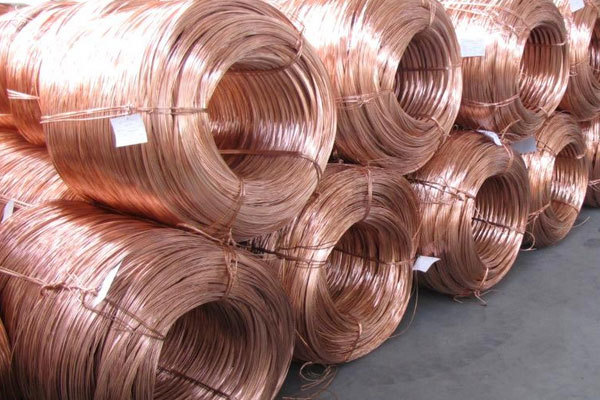
According to reports, scrap copper mainly flows to the smelting end to produce blister copper/anode plate/electrolytic copper, downstream mainly to produce copper rods, copper strips, copper rods and so on.
It can be estimated that the total amount of scrap copper imported by China in 2016 is about 1.2 million tons, and it is expected to be 1.27 million tons in 2017, of which the proportion of seven types of materials is 60%-70%, directly affecting the import volume of about 75-900000 tons. Shanghai Nonferrous Network analysts visited dismantling enterprises in Guangdong in May and found that the government has begun to tighten the approval of approval documents. Waste enterprises said that the issuance of import approval documents began to be delayed this year, and some enterprises' environmental protection approval documents were even canceled or no longer updated.
How big is the impact
According to the analysis of Shanghai Nonferrous Information, it is believed that the emotional impact of the cancellation of imports of seven types of materials at the end of next year is far greater than the actual impact, including the rise in copper prices, which is more of a boost:
1. It is still one and a half years before the current known policy implementation time is the end of next year. Will these banned seven types of materials be converted into six types of materials and transported to China? In recent years, the volume of seven types of materials transferred to Southeast Asian markets and then exported to China is on the rise, and its conversion rate is worthy of attention. It is assumed that even if it is not transported to China, it will become part of the overseas raw material supply.
2. The Chinese market has gradually entered the cycle of copper scrap recycling, and more than 50 urban mineral parks have been approved. In China's copper scrap demand, the domestic supply has exceeded the demand for imports, and the future increase will gradually reduce the demand for overseas.
multiple factors interference
On the news side, frequent supply-side interference, Canada's B .C. province fire, resulting in two copper mine operations affected. The President of the Philippines said that if the mining industry causes damage to the environment, it will charge miners unaffordable high taxes, and hopes to stop the export of mineral resources and may completely shut down mining. The Philippines is not only a supplier of nickel ore, but also one of the major producers of copper.
Environmental protection is tightening, the proportion of scrap copper imports and scrap copper consumption will be reduced. Vale's copper production in the second quarter was 100800 tons, down 4.6 percent year-on-year. BHP Billiton's second-quarter copper production fell 6% year-on-year. LME copper inventories continued to fall, and China's copper imports fell sharply in June. Multiple factors intertwined, contributing to the surge in copper prices.
The Citi report noted that sentiment in the copper market is high as Chinese manufacturers are adding to their stockpiles of copper.
Of course, the continued depreciation of the dollar is also a major factor in the recent strong performance of copper. The dollar index has now fallen below the 94 mark, close to a 13-month low, making dollar-denominated copper look cheaper.
Previous Page
Next Page
Previous Page
Next Page
RELATED INFORMATION
Address: Middle Section of Longfeng Road, Luolong Industrial Park, Xigong District, Luoyang City
General Manager Office Phone:+86-0379-64949200
Marketing Department Tel/Fax:+86-0379-64938195